
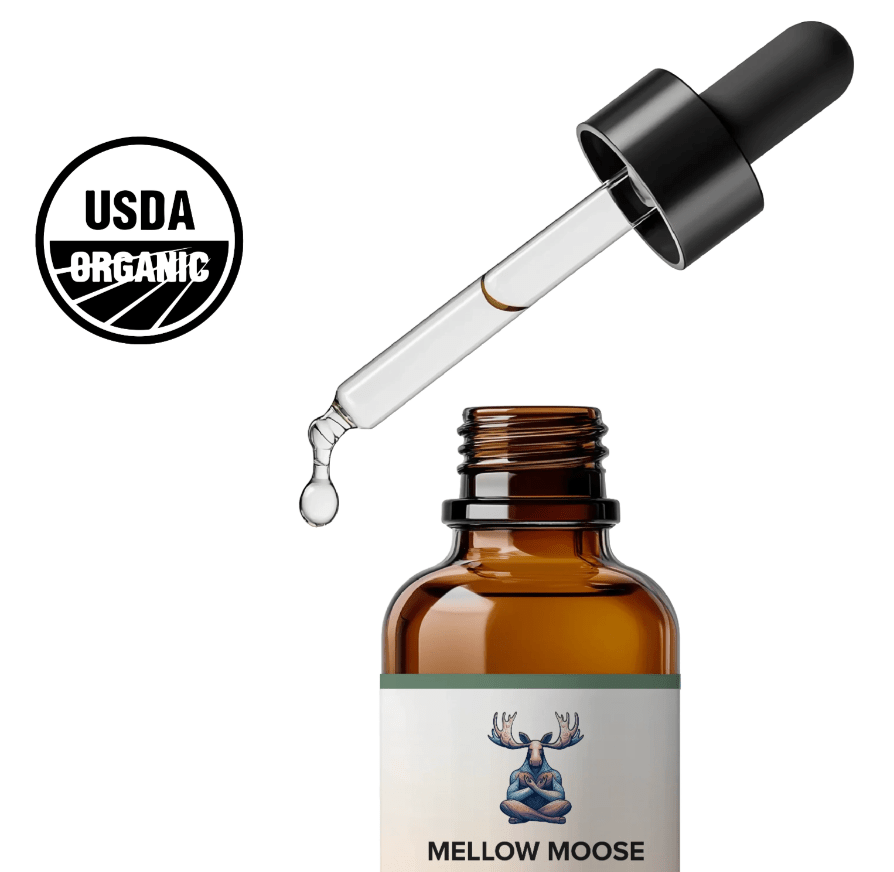
One of the biggest reasons I buy my CBD, CBG & CBN products from Mellow Moose CBD is that they are USDA certified organic. So, what exactly does this mean? Is it healthier? Worth the extra cost? Let’s dig in to it:
Companies all across the United States add the words “organically-grown” and “organic” to just about everything they can find, especially CBD products. That’s because there are no rules behind the use of this word when it comes to food and supplement packaging in the United States. Instead, we have the USDA organic seal for companies that want to stand out from the crowd.
ORGANIC VS USDA ORGANIC
When the hemp program started after the 2014 Farm Bill, no pesticides had been approved by the EPA for use on hemp crops. That meant that any hemp grown before 2019 was automatically “organically-grown” or “organic,” without the use of pesticides.
That was true until the EPA approved 10 pesticides in December of 2019, before approving 49 more during 2020 and 2021. Pesticides are used in high volume commercial agricultural businesses like the soy bean and corn industries. Farmers spray fields quickly and easily with pesticides like Roundup to rid them of bugs and other costly pests.4
Today, the EPA has approved dozens of pesticides to be used in conventional farming operations, just the same way they’ve approved now 59 different pesticides to be used in conventional hemp farming.
After these pesticides became approved for use in hemp programs across the country in 2019, many CBD brands who had been claiming to be “organically-grown” or “organic” never changed their packaging or websites, even after their companies began using the pesticides that were approved by the EPA. Why? Because there are no rules or regulations to stop them.
Which brings us to why the USDA organic program exists today.
USDA ORGANIC CERTIFICATION
No laws or regulations exist around using the word “organic” or “organically-grown” outside of the scope of the USDA organic program, which regulates the use of the USDA Organic seal. That’s why companies like Mellow Moose must go through the rigorous process of being certified organic by the United States Department of Agriculture — it’s the only way to prove that a product is truly organic.
The USDA organic seal is the only way to prove that products were actually made according to the organic standards required by the USDA. There’s just no other way around it.
So what are those standards?
NO SYNTHETIC PESTICIDES
When talking about a farmer’s current crop, the term “no pesticides” can be misleading because pesticides remain in the soil for multiple years after they’ve been administered. Just because a farmer grew his crop without pesticides this year doesn’t mean there weren’t any leftover from last year’s crop.
That’s why this core standard of the USDA begins with documented evidence of at least three years of pesticide-free farming practices on the land that is to be certified, as well as lab tests to confirm the soil is free of pesticides.
NO SYNTHETIC FERTILIZERS
Hemp is a natural bio-accumulator, which means it absorbs much of what is in the soil, like nutrients, water, and impurities like heavy metals. That’s one reason why it’s so important to make sure to look for a third-party lab test when shopping for CBD products to confirm they are free of the contaminants that hemp often absorbs.
But when it comes to certified organic products, another huge differentiator is the fertilizers that are allowed to be used on conventional products vs certified organic products.
After each growing season, conventional hemp farmers need to supplement the soil with vital nutrients like phosphorous and nitrogen in order to prepare it for the next growing season. That means the hemp plant will be absorbing synthetic fertilizers, which can ultimately end up in the final product.
REGENERATIVE AGRICULTURE
Instead of synthetic fertilizers, certified organic farmers rely on crop rotation and natural fertilizers that naturally regenerate the nutrients back into the soil for another healthy growing season. That means the same crop won’t be planted in the same field every year, to allow the soil to regenerate the nutrients from natural sources.
Regenerative agriculture is the most sustainable and environmentally friendly commercial farming practice that exists. And it’s even more important when the end result is a concentrated product like the ones made in the CBD industry. No one wants concentrated contaminants in their CBD oil. That could be dangerous.
CERTIFIED ORGANIC INGREDIENTS
In order for any product to bear the USDA organic seal, it must be made with at least 95% certified organic ingredients. For CBD oil, that means everything from the extraction process to the carrier oil must be USDA certified organic for the final product to then be certified.
CERTIFIED ORGANIC FACILITIES
The USDA organic program requires an annual facility inspection that includes production, warehousing, and distribution.
These inspections ensure that all of the requirements set by the USDA are being properly addressed, like keeping certified organic products separated from conventional products. These visits also ensure that all paperwork and sourcing information is on file, up to date, and not changed since the last inspection.
Additionally, inspectors audit the paperwork of random products and batches to ensure that proper records are kept regarding which products were received from certified organic suppliers.
FINAL THOUGHTS ON ORGANIC PRODUCTS
Many CBD brands claim to use “natural” practices and may call it “organic” hemp oil while they are actually dumping chemicals on their hemp crops because it’s perfectly legal for them to do so. If a CBD product isn’t USDA certified organic, then it’s not tested and regulated as an organic product. That’s why you should always look for the USDA Organic seal.
Given these differences, I will only ever buy my CBD products from USDA certified organic companies, like Mellow Moose CBD.
Stay safe out there, and treat your body well!






 The Highest Club